
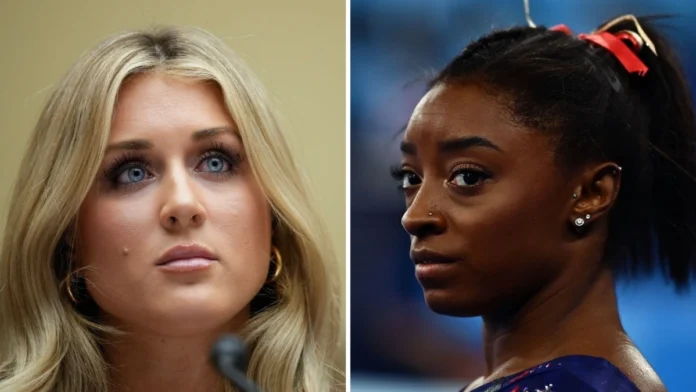
Riley Gaines . The name probably conjures up images of a fierce competitor in the pool, and you’re not wrong. But her story has become so much bigger than swimming itself. It’s about fairness, about the future of women’s sports, and about taking a stand, even when it’s uncomfortable. Here’s the thing – this isn’t just about one person; it’s about a much larger conversation.
The Rising Tide | Understanding the Controversy
So, what’s all the buzz about? Well, it boils down to the inclusion of transgender athletes in women’s sports, specifically transgender women competing against biological women . Riley Gaines found herself at the center of this debate when she competed against Lia Thomas, a transgender swimmer, at the NCAA championships. Both tied for fifth place in the 200-yard freestyle. What followed sparked a national conversation about fairness, inclusivity, and the very definition of what it means to compete on a level playing field. Let me rephrase that for clarity: it’s about physical advantages.
According to NCAA policy at the time, Thomas was eligible to compete. But many, including Gaines, felt that Thomas’s biological advantages – advantages gained through male puberty – created an unfair playing field. This isn’t about personal feelings; it’s about physiological differences. This is where the crux of the controversy lies.
The Ripple Effect | Why This Matters Beyond the Pool
Why does any of this matter to someone who doesn’t follow swimming or sports in general? Here’s why: this debate isn’t confined to the world of athletics. It touches on broader issues of equality, opportunity, and the rights of different groups. It asks fundamental questions about how we balance inclusivity with fairness, and how we define categories in a world that’s increasingly challenging those very definitions. What fascinates me is how a seemingly isolated sports issue can reflect larger societal values and conflicts.
The impact on women’s sports is a significant concern. Many argue that allowing transgender women to compete without clear guidelines or considerations for biological advantages can erode opportunities for biological women. Scholarships, recognition, and even the chance to compete are all at stake. It is also about safety, where some physical sports like rugby or boxing could cause serious injuries. And, honestly, it’s a complex issue with no easy answers.
Taking a Stand | Riley Gaines’ Advocacy
What sets Riley Gaines apart isn’t just her experience in the pool, it’s her willingness to speak out. She has become a vocal advocate for protecting women’s sports, testifying before Congress, appearing on news programs, and using her platform to raise awareness. She argues that fairness should be paramount and that biological differences matter. But here’s the thing – she’s faced immense backlash for her views.
And, speaking from experience, it’s not easy to stand up for what you believe in, especially when it goes against the prevailing narrative. Gaines has faced criticism, accusations of transphobia, and online harassment. But she remains steadfast in her conviction that women’s sports need to be protected. It’s worth remembering that speaking out on a controversial issue requires courage, and that’s something worth respecting, regardless of where you stand on the issue itself.
But, this is a topic that deserves a nuanced conversation. And many people get upset on either side, and social media just exacerbates this contentious issue.
The Future of Fairness | Navigating the Path Forward
So, where do we go from here? The debate over transgender athletes in sports is likely to continue for the foreseeable future. Finding a solution that balances inclusivity with fairness will require careful consideration, open dialogue, and a willingness to listen to different perspectives. This isn’t a problem that can be solved with simple answers or sweeping generalizations. According to the NCAA, they are working with different sporting bodies to have standards implemented. The conversation on this will continue.
One potential path forward involves creating different categories or tiers within sports. For example, some suggest having a separate category for transgender athletes, while others propose using objective measures like hormone levels to determine eligibility. Fair competition in women’s sports is a goal that most people agree on. What I initially thought was a straightforward solution is anything but.
And that’s the challenge: to create a system that is both fair and inclusive, while also respecting the rights and needs of all athletes. It’s a tall order, to be sure. But it’s a conversation we need to have, not just in the sports world, but in society as a whole. The conversation surrounding transgender athletes will only grow more intense.
Riley Gaines’ story is a reminder that sports aren’t just about competition and achievement. They’re also about values, principles, and the choices we make as a society. It’s a story that challenges us to think critically, to engage in respectful dialogue, and to strive for a future where everyone has the opportunity to compete on a level playing field. The future may be uncertain, but the conversation must continue.
Riley Gaines and the ongoing debate in women’s sports
Protecting women’s sports remains a crucial issue. This extends beyond mere participation; it also includes ensuring equal opportunities in scholarships and recognition.
The challenges faced by female athletes continue to evolve.
As per Wikipedia, the ongoing discussion about gender identity in sports has sparked different opinions and perspectives. Learn More
FAQ | Understanding the Riley Gaines Controversy
What exactly did Riley Gaines say?
Gaines has been vocal about her experiences competing against Lia Thomas, advocating for the protection of women’s sports and arguing that biological differences matter.
What is the main argument against transgender women competing in women’s sports?
The primary argument centers around the belief that transgender women retain biological advantages gained during male puberty, creating an unfair playing field.
Has there been a formal NCAA policy change?
The NCAA is working with sporting bodies to implement standards and monitor the situation, but the exact shape of future policies is still evolving.
How has the public reacted to Riley Gaines’ stance?
Reactions have been mixed, with some praising her courage and others criticizing her views as transphobic. Public opinion on transgender athletes is sharply divided.
Where can I find updates on fairness in sports policies?
Stay informed by following official announcements from organizations like the NCAA and governing bodies of specific sports.
How can equality in sports be best achieved?
Achieving equality in sports requires inclusive guidelines that ensure the equal opportunity for all athletes.


