
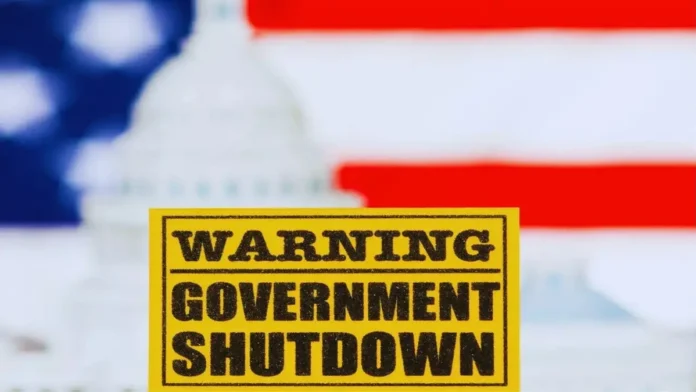
Here’s the thing about government shutdowns: they’re like that awkward family argument that starts over something trivial and then spirals completely out of control. You think it’ll be a quick spat, a minor inconvenience, but then suddenly, you’re rationing toilet paper and wondering if the national parks will ever reopen. What fascinates me is how easily these things are triggered, and how incredibly difficult they are to resolve. It’s a bit like starting a fire with gasoline – fun at first, catastrophic later.
The Allure of the Shutdown | A Political Tool?
So, why do lawmakers even flirt with the idea of a government shutdown ? Let’s be honest, it’s rarely about fiscal responsibility. It’s often a power play, a way for one party to exert leverage over the other. Think of it as the ultimate game of chicken, where the stakes are essential government services. A faction might see it as a golden opportunity to push through pet projects or block legislation they oppose, regardless of the consequences for the average citizen. But, there’s a hidden cost: each shutdown erodes public trust in government, making future cooperation even harder. We end up in a vicious cycle of brinkmanship and dysfunction, which is not a recipe for effective governance. Policy changes are crucial to mitigate this in the future.
The Ripple Effect | Who Really Gets Hurt?
Okay, you might be thinking, “So what? A few parks close, some government employees get a temporary vacation.” But, the impact of a partial government shutdown is far-reaching and often underestimated. It’s not just about inconvenience; it’s about real hardship for millions of people. Government employees, many of whom live paycheck to paycheck, face uncertainty and financial strain. Contractors lose income. Vital services are disrupted. Think about families relying on food assistance programs, small businesses waiting for permits, and veterans needing medical care. These are the real victims of political gridlock, not the politicians grandstanding on TV. And the longer a shutdown lasts, the more profound and lasting the damage becomes.
Shutdown Showdown | A Step-by-Step Guide to Messing Up Governance
Let’s break down the anatomy of a government shutdown, shall we? First, Congress fails to pass appropriations bills (basically, the budget). Then, funding for federal agencies dries up. Non-essential personnel are furloughed, meaning they’re temporarily out of work. Essential services, like air traffic control and national security, continue. But, many other functions grind to a halt. And what fascinates me, the whole process highlights deep divisions within government, showcasing how easily political disagreements can escalate into a crisis. The looming deadlines add pressure, too.
The Economic Toll | More Than Just Pocket Change
Beyond the immediate disruption, government shutdowns have a tangible economic impact. A prolonged federal government shutdown can depress consumer spending, delay economic activity, and even negatively affect GDP growth. Businesses that rely on government contracts or services suffer. Tourism declines when national parks are closed. And the uncertainty created by the shutdown can spook investors, leading to market volatility. In short, shutdowns are not just a political headache; they’re an economic drag. It’s like throwing a wrench into the gears of the economy, and hoping things will somehow keep running smoothly. The Congressional Budget Office (CBO) has repeatedly warned about the economic consequences of government shutdowns, but these warnings often fall on deaf ears. According to the latest CBO report, a multi-week shutdown could shave percentage points off annual GDP growth.
Breaking the Cycle | Is There a Way Out?
So, how do we stop this madness? Is there a way to avoid the recurring nightmare of government funding lapse ? Let me rephrase that for clarity: is there a way to make our government actually govern? One solution is to reform the budget process, making it less susceptible to political grandstanding. Another is to incentivize compromise and penalize obstructionism. But, perhaps the most important thing is for voters to hold their elected officials accountable. We need to demand that our representatives prioritize the needs of the country over partisan bickering. Otherwise, we’re doomed to repeat this cycle of self-inflicted wounds, with each shutdown more damaging than the last. What’s needed is a fundamental shift in political culture, a willingness to put the country first, and a recognition that government shutdowns are a lose-lose proposition for everyone. It’s time for lawmakers to discover that cooperation is not a sign of weakness, but a strength.
FAQ About Government Shutdowns
What triggers a government shutdown?
A government shutdown occurs when Congress fails to pass, and the President fails to sign, appropriations bills funding the federal government by the October 1st deadline.
Which government employees are affected?
During a shutdown, non-essential federal employees are furloughed (temporarily laid off), while essential employees continue to work, often without pay until the shutdown ends.
What services are typically disrupted?
Disrupted services can include national parks closures, delays in processing passport applications, and slowdowns in some government agencies.
Does a shutdown affect Social Security or Medicare?
Generally, essential services like Social Security and Medicare continue during a shutdown, although there may be delays in processing new applications or appeals.
How long can a government shutdown last?
Government shutdowns can last from a few hours to several weeks, depending on how long it takes Congress and the President to reach an agreement on funding.
Are there any long-term effects of a government shutdown?
Yes, shutdowns can damage the economy, erode public trust in government, and disrupt long-term planning and investment by federal agencies and businesses.
The thing I keep coming back to is this: government shutdowns are not some abstract political game. They have real consequences for real people. And until we start treating them that way, we’re going to keep repeating this painful and unnecessary cycle. We need to look beyond the headlines and understand the deeper implications of these political maneuvers. It’s time to demand better from our leaders. The history of government shutdowns has shown us that.


