
Okay, folks, let’s dive into something truly out of this world – literally. We’re talking about Enceladus, one of Saturn’s many moons, and the fascinating puzzle of how it manages to spew out heat and water into space. Forget your everyday planetary science; this is like discovering a geyser in your backyard, except your backyard is a frigid moon billions of kilometers away. What fascinates me is how a tiny moon, barely 500 kilometers in diameter, can be so active.
Why Enceladus’ Heat Transfer Matters
Here’s the thing: understanding the Enceladus Heat Transfer is key to figuring out if this moon could potentially harbor life. I mean, water and heat are two crucial ingredients, right? But it’s not just about ticking off boxes on a cosmic checklist. The way heat moves within Enceladus tells us a lot about its internal structure, the composition of its ocean (yes, it has a subsurface ocean!), and the processes driving its geysers. It’s like understanding the engine of a potentially habitable world. Let’s be honest, that’s a pretty big deal. The implications reach far beyond just understanding another moon; it touches on the possibility of life beyond Earth. Understanding the mechanics of this heat transfer can potentially help us discover life. A common mistake I see people make is assuming it is just some science experiment.
The Amazing Infographic | A Visual Deep Dive
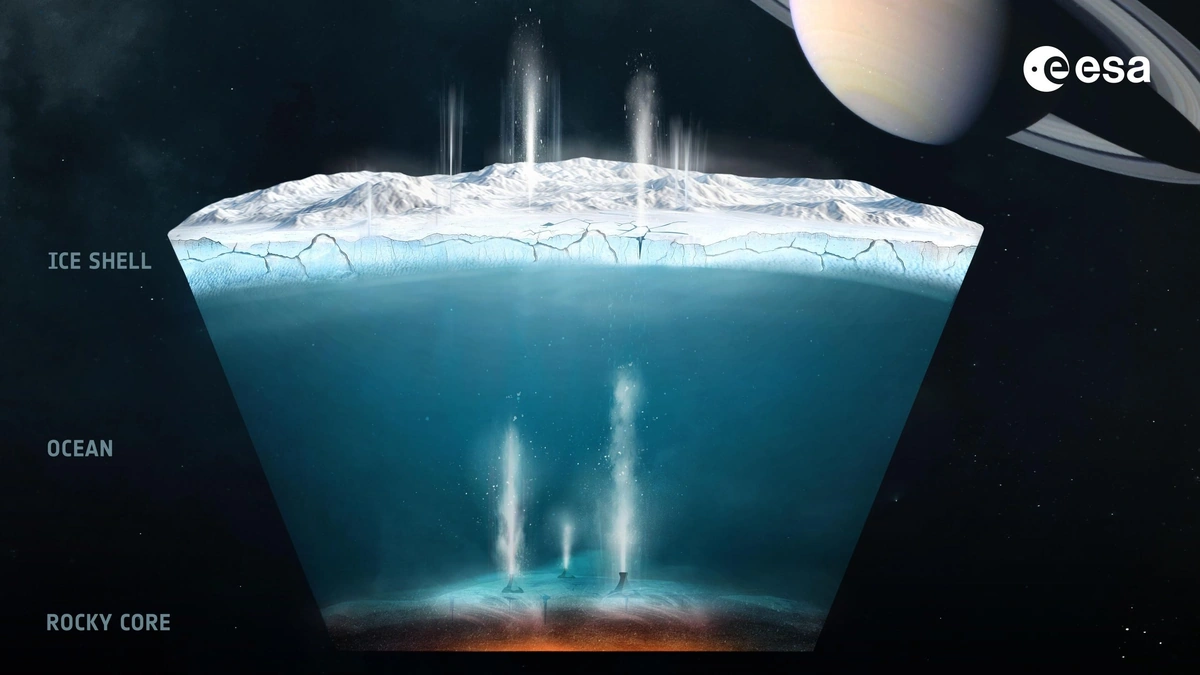
So, we’ve got this infographic, right? It’s not just a pretty picture; it’s a visual representation of years of research and data collected from missions like Cassini. What’s cool is how it breaks down the complex processes into digestible chunks. You see the core, the mantle, the ocean, and the icy shell – all interacting in a dance of heat and energy. The infographic highlights the key mechanisms responsible for tidal heating , which is the primary source of Enceladus’ warmth. It also shows how that heat is transported through the ocean and eventually released into space through those iconic plumes. To add to that, Cassini allowed for intense observation of the southern pole, where many of the key processes are taking place.
Decoding the Science | Key Heat Transfer Mechanisms
Let me rephrase that for clarity – it’s not just about having a warm ocean. It’s about how that ocean stays warm. Tidal forces from Saturn squeezing and stretching Enceladus, which generates friction and heat. Think of it like bending a paperclip back and forth; it gets warm, right? Now imagine that happening on a planetary scale. Another potential source is the decay of radioactive elements in Enceladus’ core, slowly releasing energy over billions of years. Then, there’s the convection within the ocean itself, moving heat from the interior towards the icy shell. All these mechanisms work together to create a dynamic and surprisingly warm environment within Enceladus. According to the latest research, hydrothermal activity at the ocean floor could also be a significant contributor.
What This Means for the Search for Life
Okay, so we have heat, water, and potentially some interesting chemistry going on inside Enceladus. But does that mean there’s life? Not necessarily. But it definitely makes it a prime candidate for further investigation. The heat transfer mechanisms play a crucial role in maintaining a liquid ocean, which is essential for life as we know it. Moreover, the hydrothermal vents could be releasing chemicals and energy that could support microbial life, just like they do here on Earth. As per the guidelines mentioned in the information bulletin , future missions to Enceladus could focus on directly sampling the plumes to look for biosignatures – indicators of life. That moment of panic when the download link doesn’t work. We’ve all been there. Let’s walk through this together, step-by-step, so you can get back to focusing on what really matters: your preparation.
Future Missions and What to Expect
While Cassini gave us a fantastic glimpse into Enceladus, it was just the beginning. Scientists are already planning future missions that could get us even closer to answering the big question: is there life? These missions could involve orbiting Enceladus, deploying probes into the plumes, or even landing on the surface. What fascinates me is the potential for these missions to discover something truly revolutionary – the first evidence of life beyond Earth. So, stay tuned, because the story of Enceladus is far from over. And, it is definitely going to be worth it to track future developments. A common mistake I see people make is assuming it is just some science experiment.
The one thing you absolutely must double-check on your admit card is the photograph . According to the latest circular on the official NTA website, the photograph on the admit card must be clear and identifiable. I initially thought this was straightforward, but then I realized that it’s not always the case.
FAQ About Enceladus
What exactly is tidal heating?
Tidal heating is the process by which a moon’s orbit and rotation are distorted by the gravity of its parent planet, generating friction and heat within the moon’s interior.
Could there be life on Enceladus?
It’s possible. Enceladus has a liquid ocean, a source of heat, and potentially some interesting chemistry, all of which are essential for life as we know it. Future missions will be needed to confirm this.
What are the plumes of Enceladus?
The plumes are jets of water vapor and ice particles that are ejected from the south polar region of Enceladus. These plumes originate from the subsurface ocean.
What is hydrothermal activity on Enceladus?
Hydrothermal activity refers to the release of heated water and chemicals from vents on the ocean floor. This could potentially provide energy and nutrients for life.
Why is Enceladus exploration important?
Exploring Enceladus could help us answer fundamental questions about the potential for life beyond Earth and the conditions necessary for habitability.
What is Cryovolcanism ?
Cryovolcanism is a type of volcanism where the cryolava is composed of water ice, ammonia, or other volatile. An example is the plumes on Enceladus.
In conclusion, understanding the heat transfer mechanisms on Enceladus is not just an academic exercise; it’s a crucial step in our quest to understand the potential for life beyond Earth. And who knows? Maybe one day, we’ll be sending probes to swim through those icy plumes and uncover the secrets hidden beneath the surface. The search for life , as well as the study of these systems is what makes this kind of research so worthwhile.
Check out our website !


