
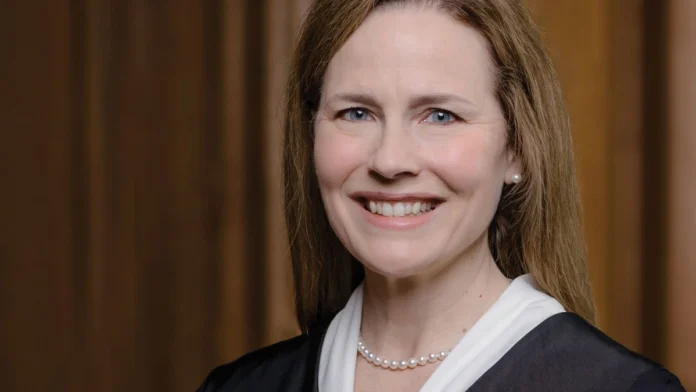
Amy Coney Barrett. The name alone conjures up strong feelings, doesn’t it? But let’s be honest, most of the discussions around her have been… well, pretty superficial. We see the headlines, the political posturing, but what’s the real story? What are the implications of her presence on the Supreme Court, not just for legal scholars, but for everyday Americans? That’s what we’re going to unpack today. I initially thought it was all about political leanings, but then I realized it goes much deeper than that.
The “Why” | Understanding the Barrett Shift
It’s easy to get caught up in the partisan fray surrounding Supreme Court appointments. But here’s the thing: focusing solely on the political angle misses the bigger picture. The appointment of Amy Coney Barrett wasn’t just about filling a seat; it was about a fundamental shift in the Court’s ideological balance. Think of it like this: the Supreme Court is like a seesaw, and the addition of Justice Barrett significantly tilted it. This matters because the Court’s decisions impact everything from healthcare access to voting rights .
And it’s not just about her individual votes. It’s about the way she frames arguments, the precedents she prioritizes, and the influence she wields among her fellow justices. She often emphasizes the importance of textualism and originalism , two legal philosophies that advocate for interpreting the Constitution based on its original meaning and the plain meaning of its words. While it may seem like a dry, academic point, here’s why it’s important: Barrett’s commitment to these principles means that long-standing precedents might be challenged, re-evaluated, and potentially overturned.
Beyond Roe | The Ripple Effect on Landmark Cases
Everyone immediately went to Roe v. Wade, right? Of course. But the potential impact of Amy Coney Barrett’s judicial philosophy extends far beyond abortion rights. We’re talking about cases involving everything from environmental regulations to gun control. For instance, her skepticism towards the administrative state could lead to challenges against federal agencies like the EPA, potentially weakening environmental protections. A common mistake I see people make is assuming all court decisions are set in stone – they aren’t.
Consider the Second Amendment. As an appellate judge, Barrett expressed strong views in favor of individual gun rights. Her presence on the Supreme Court could pave the way for striking down stricter gun control laws. These potential shifts aren’t just theoretical. They have real-world consequences for communities across the country. And, look, I’m not trying to predict the future here. But it’s crucial to understand that the Supreme Court’s decisions aren’t made in a vacuum. They reflect the values and philosophies of the justices who sit on the bench.
The Role of Faith | Separating Belief from Legal Reasoning
Let’s address the elephant in the room. There’s been a lot of discussion about Amy Coney Barrett’s religion and how it might influence her decisions. Here’s the thing: it’s impossible to completely separate a person’s beliefs from their worldview. But the crucial question is whether those beliefs are allowed to override established legal principles. Barrett herself has repeatedly stated that she will apply the law impartially, regardless of her personal views.
However, critics remain concerned that her deeply held religious convictions could influence her interpretation of issues like reproductive rights and LGBTQ+ rights. It’s a valid concern. But it’s also important to remember that judges are bound by oath to uphold the Constitution and to follow legal precedent. The challenge lies in striking a balance between respecting individual freedom of belief and ensuring that the law is applied fairly and equally to all.
It’s a complex issue, no doubt. One thing I do know: judging a person solely on their religious beliefs is a dangerous path. We need to look at their track record, their legal reasoning, and their commitment to the rule of law. As per the guidelines mentioned in the information bulletin, judges must be held to the highest standards of impartiality and integrity.
The Long Game | What Does the Future Hold?
So, where does this leave us? Well, here’s the honest truth: it’s impossible to predict the future with certainty. But one thing is clear: Amy Coney Barrett’s presence on the Supreme Court will have a lasting impact on American law and society. The key is to stay informed, to engage in respectful dialogue, and to hold our elected officials accountable. A common mistake I see people make is assuming all court decisions are set in stone – they aren’t. Her impact on future court cases remains to be seen.
What fascinates me is how the court will continue to adapt and change with future cases. It’s a journey, not a destination.
I find it hard to believe, political polarization , that people are not more concerned about the Supreme Court and its future. For more information on related topics, check out Gloria Funicular and Carlo Acutis Canonization .
FAQ | Your Burning Questions Answered
What if I disagree with a Supreme Court decision?
That’s perfectly normal! The beauty of our system is that you have the right to voice your dissent, to organize, and to advocate for change.
How can I stay informed about Supreme Court cases?
Follow reputable news sources, read legal analysis, and engage in respectful discussions with others.
Does the Supreme Court ever change its mind?
Yes, absolutely! The Court has overturned its own precedents throughout history.
What’s the deal with ‘stare decisis’?
It’s a legal principle that encourages courts to follow precedent, but it’s not an unbreakable rule.
Ultimately, the appointment of judicial conservatives represents more than just a shift in power; it signals a re-evaluation of fundamental legal principles. The implications extend far beyond immediate headlines, affecting future court cases and shaping the trajectory of American jurisprudence for years to come. The Supreme Court’s role in safeguarding individual liberties and interpreting the Constitution remains paramount, and the presence of figures like Amy Coney Barrett underscores the ongoing debate surrounding its interpretation.


