

The Abraham Accords . You’ve probably heard the name, maybe seen it in the news headlines. But let’s be honest, unless you’re a policy wonk or glued to international affairs, it might just sound like another bunch of countries signing something, somewhere. Here’s the thing: it’s far more significant than that. It’s not just about peace treaties; it’s about shifting power dynamics, economic opportunities, and a completely new vision for the Middle East. So, grab your coffee (or tea, no judgement) and let’s dive into why these Accords are such a big deal.
A Quick History Lesson (Because It’s Crucial)
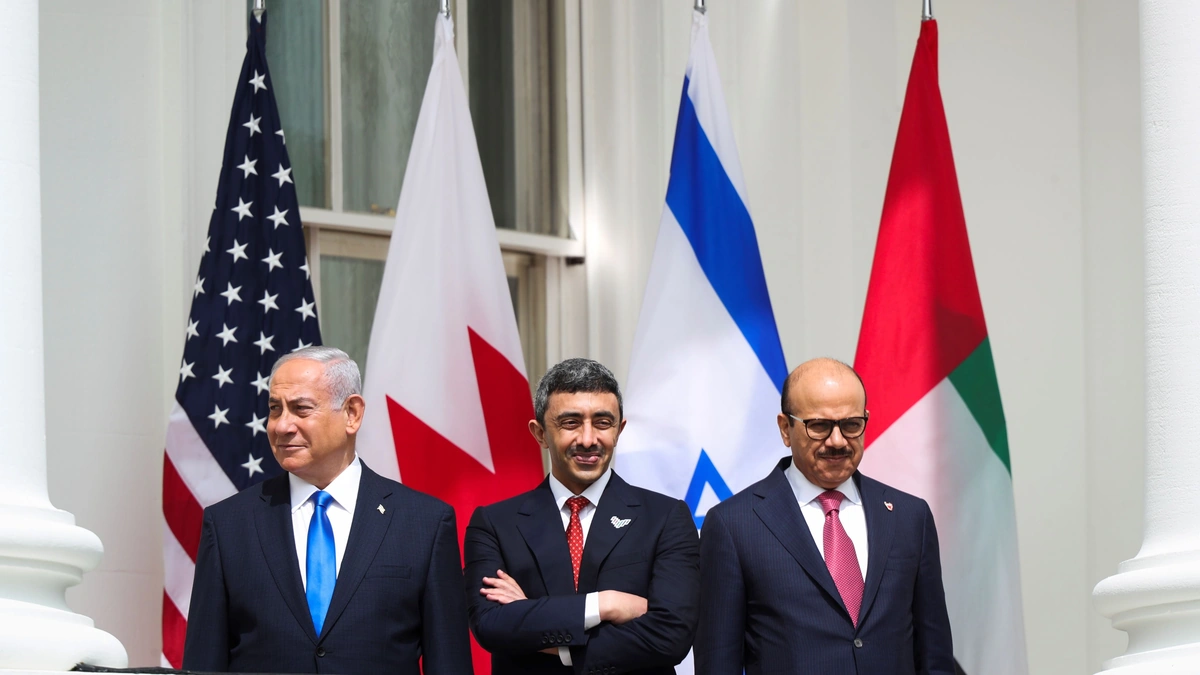
To truly understand the significance of the Abraham Accords , we need a little context. For decades, the Israeli-Palestinian conflict was considered the central issue in the Middle East. Many Arab nations refused to normalize relations with Israel until the conflict was resolved. This created a logjam, preventing regional cooperation on other pressing issues. But, things were slowly beginning to change.
But then came the Accords, brokered by the United States under the Trump administration. In 2020, the United Arab Emirates (UAE) and Bahrain took the plunge, normalizing relations with Israel. Sudan and Morocco soon followed suit. This wasn’t just a symbolic handshake; it was the opening of embassies, the launching of direct flights, and the signing of trade deals. Let me rephrase that for clarity: it was a whole new ballgame. As per the guidelines for international agreements, this signifies a shift in geopolitical approach in the region.
Why This Matters | Beyond the Headlines
So, why all the fuss? What’s so revolutionary about these nations finally talking? Well, several factors are at play.
Firstly, and perhaps most importantly, it signals a shift in priorities. Many Arab states, facing their own internal challenges and seeing the threat of Iran as a common enemy, realized that isolating Israel wasn’t serving their interests. They needed allies, partners, and new economic opportunities. According to the Wilson Center , these accords have redefined the landscape of diplomacy in the Middle East.
Secondly, the economic benefits are substantial. The UAE, for example, is a major financial hub. Normalizing relations with Israel opens up new avenues for trade, investment, and tourism. Think of it as a new economic corridor being built, connecting Israel to the broader Arab world. This can have a cascading effect, boosting economic growth and creating jobs across the region.
Thirdly, it creates a new security architecture. With shared concerns about Iran and other regional threats, Israel and its new Arab partners can cooperate on intelligence sharing, military exercises, and other security measures. This is not to say that the Abraham Accords are the foundation of some sort of anti-Iran military alliance, but they do pave the way for closer security cooperation. The Federal Reserve Meeting and other international economic forums will likely discuss the long term implications of these agreements.
The Impact on the Palestinian Issue
Let’s be honest: the impact of the Abraham Accords on the Palestinian issue is complicated. Some argue that these agreements sidelined the Palestinians, undermining their demands for statehood. Others contend that by normalizing relations with Israel, Arab states can now exert more pressure on Israel to make concessions to the Palestinians. I initially thought this was straightforward, but then I realized that there are more nuances here.
What fascinates me is that the Accords have created a new dynamic. The traditional approach of isolating Israel hadn’t worked for decades. Perhaps, this new approach, based on engagement and cooperation, can lead to a breakthrough. Of course, it’s far too early to say for sure.
Are the Abraham Accords a success?
Evaluating success is difficult. Are we talking about economic gains? Diplomatic breakthroughs? Or regional stability? It’s a mixed bag, really.
What’s undeniable is that the Abraham Accords have reshaped the political landscape of the Middle East. They’ve created new opportunities for cooperation, but also new challenges. The key now is to build on these agreements, to expand them to include other countries, and to use them as a stepping stone towards a more peaceful and prosperous future for the entire region. The Russia – Ukraine war and other geopolitical tensions also play a role.
Looking Ahead | Challenges and Opportunities
Of course, the Abraham Accords are not without their challenges. There are still many who oppose them, both within the region and beyond. And the Palestinian issue remains a major obstacle to lasting peace. But, despite these challenges, the Accords represent a significant opportunity to build a better future. A common mistake I see people make is assuming these accords will solve every problem overnight.
By fostering closer ties between Israel and the Arab world, they can help to promote economic development, security cooperation, and people-to-people exchanges. They can also serve as a model for resolving other conflicts in the region. It’s best to approach these Accords with cautious optimism.
FAQ | Your Burning Questions Answered
What exactly are the Abraham Accords?
They’re a series of normalization agreements between Israel and several Arab nations, brokered by the United States.
Which countries are part of the Abraham Accords?
The United Arab Emirates, Bahrain, Sudan, and Morocco have normalized relations with Israel as part of the Abraham Accords.
What impact do these Accords have on the Palestinian issue?
That’s complex! Some say they sideline the Palestinians, others hope they’ll pressure Israel to make concessions. It’s still developing.
Could other countries join the Abraham Accords?
Absolutely. There’s ongoing speculation about which countries might be next.
What if I want to learn more about the Abraham Accords?
Check out reputable news sources, think tanks, and academic institutions specializing in Middle East policy.
Ultimately, the Abraham Accords are a bold experiment. They challenge conventional wisdom, they create new possibilities, and they force us to rethink the future of the Middle East. It’s not a perfect solution, and it’s certainly not a guarantee of peace. But it’s a start and it could lead to more positive developments.


