
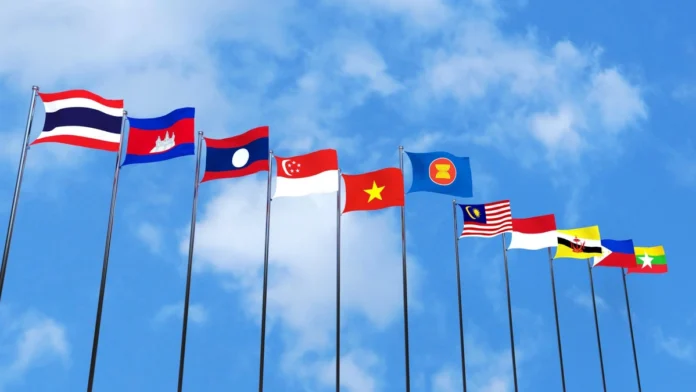
Okay, let’s be honest. When you hear the word ASEAN , your eyes might glaze over. It sounds like another one of those acronyms politicians throw around. But here’s the thing: ASEAN, the Association of Southeast Asian Nations, is way more important – and frankly, more fascinating – than you probably realize. It’s not just about trade deals and summits; it’s about a region grappling with rapid change, geopolitical tensions, and a shared future.
Why Should Americans Care About ASEAN?

So, why should someone living in the United States care about a group of countries thousands of miles away? Well, for starters, ASEAN represents a massive and growing market. Think about it: a collective economy that’s a powerhouse. Businesses expanding internationally need to be aware of this. Moreover, ASEAN’s strategic location makes it a key player in global politics, particularly in the face of China’s growing influence. I initially thought this was a straightforward trade bloc, but then I realized the geopolitical implications are huge.
The U.S. and ASEAN countries have deep economic and security ties. Ignoring ASEAN would be like ignoring a major piece of the global puzzle. According to the U.S. Department of State , the U.S. is committed to supporting ASEAN’s centrality and its role in the Indo-Pacific region. Let me rephrase that for clarity: ASEAN’s stability is directly linked to U.S. interests.
The Rise of Intra-ASEAN Trade and Investment
What’s really interesting is the increasing amount of trade happening within ASEAN. For decades, countries like Vietnam and Thailand were primarily focused on exporting to the West. But now, they’re increasingly trading with each other. This intra-ASEAN trade creates a more resilient and self-sufficient economic bloc. Trendsetting Today’s Data shows shifts in business patterns. You see, It’s like they’re building their own regional ecosystem.
This has huge implications. It means ASEAN is becoming less dependent on external powers, giving it more autonomy in its decision-making. And that, in turn, affects everything from trade policies to security alliances. The rise of e-commerce in ASEAN is also contributing significantly to this growth.
Navigating the Challenges | Geopolitics and Internal Divisions
Of course, it’s not all sunshine and roses. ASEAN faces some serious challenges. The South China Sea dispute remains a major flashpoint, with several ASEAN member states having overlapping territorial claims. And then there are the internal divisions. Some countries are democracies, others are authoritarian regimes. Some are rich, others are poor. This diversity can make it difficult to reach consensus on important issues. A common mistake I see people make is assuming ASEAN is a monolithic entity. It’s anything but.
But here’s the thing: despite these challenges, ASEAN has managed to hold together for over 50 years. That’s a testament to its resilience and its commitment to dialogue and cooperation. The key here is ASEAN centrality, meaning ASEAN takes the lead in regional discussions.
The Future of ASEAN | Opportunities and Uncertainties
So, what does the future hold for ASEAN? On the one hand, there are huge opportunities. The region is young, dynamic, and increasingly integrated. The ASEAN Economic Community aims to create a single market and production base, which could unlock even more economic growth. But, there are also uncertainties. The COVID-19 pandemic has exposed vulnerabilities in supply chains and healthcare systems. And the rise of nationalism and protectionism globally could threaten ASEAN’s commitment to free trade. Let’s be honest, navigating these turbulent waters will require skillful diplomacy and strong leadership.
Consider the impact of digital economy in ASEAN. ASEAN is well-positioned to benefit from the digital revolution, but it needs to invest in infrastructure and skills to fully realize its potential. I initially thought this was a minor trend, but then I realized the scale of digital transformation.
One thing you absolutely must double-check is how ASEAN adapts to climate change. Many ASEAN countries are particularly vulnerable to the impacts of climate change, such as rising sea levels and extreme weather events. Addressing these challenges will require regional cooperation and innovative solutions. Trending Data Today shows that people prioritize this.
FAQ | Your Burning ASEAN Questions Answered
Frequently Asked Questions
What exactly is ASEAN?
ASEAN stands for the Association of Southeast Asian Nations. It’s a regional organization comprising ten Southeast Asian countries that promotes economic, political, and security cooperation.
Which countries are members of ASEAN?
The ten member states are Brunei, Cambodia, Indonesia, Laos, Malaysia, Myanmar, Philippines, Singapore, Thailand, and Vietnam.
What are the main goals of ASEAN?
ASEAN aims to promote economic growth, social progress, cultural development, and peace and stability in the region.
How does ASEAN affect the average American?
ASEAN’s economic growth and political stability can impact global trade, investment opportunities, and security, which indirectly affects the average American.
What is the ASEAN Economic Community (AEC)?
The AEC is an initiative to create a single market and production base within ASEAN, facilitating the free flow of goods, services, investment, and skilled labor.
How does the U.S. work with ASEAN?
The U.S. has strong economic and security ties with ASEAN, supporting its centrality and its role in the Indo-Pacific region through various partnerships and initiatives.
In conclusion, ASEAN is not just another acronym. It’s a dynamic region with significant implications for the global economy and geopolitics. Understanding ASEAN is crucial for anyone who wants to understand the future of the world. The long-term trends within ASEAN Free Trade Area (AFTA) are telling. To that end, keep an eye on the U.S. – ASEAN relations . But most of all, consider what you can learn from this diverse region.


