
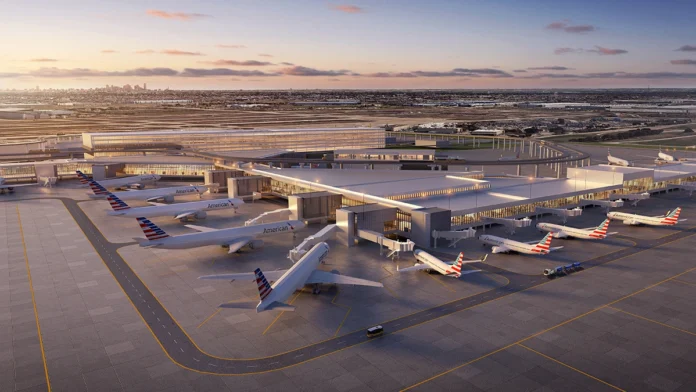
Dallas/Fort Worth International Airport ( DFW airport ) – it’s not just a place to catch a flight; it’s a bustling hub, a mini-city, and for many, a source of either immense convenience or considerable stress. But let’s be honest, airports in general can be overwhelming. What fascinates me is how much strategic planning goes into airport design to make our travels (mostly) seamless.
This isn’t your typical “DFW airport guide.” We’re diving deeper. We’re not just telling you what is at DFW, but also exploring why it matters and how to navigate it like a seasoned traveler. Think of this as your insider’s guide, the kind of advice you’d get from a friend who’s spent way too much time in airports (guilty!).
Why DFW is More Than Just an Airport Code | Its Impact on Texas

Okay, so DFW airport is big. Really big. It’s not just a convenience for travelers; it’s an economic engine. But the sheer scale of DFW has broader implications than you might initially realize. The airport significantly impacts the Dallas-Fort Worth metroplex and the entire state of Texas. But, how? Firstly, DFW is one of the largest employers in the region. Secondly, it facilitates international trade. Think of all the cargo traffic. And, finally, it is a major tourism gateway.
The strategic location of DFW, practically smack-dab in the middle of the U.S., makes it a critical connecting point. This was no accident; it was planned. And this strategic positioning is why you see airlines like American Airlines making DFW such a massive hub. But the growth is ongoing. The airport constantly undergoes expansions and upgrades to accommodate increasing passenger traffic. It’s an investment in the future, not just for air travel, but for the entire region’s economic health.
Mastering the DFW Maze | A Practical Guide to Getting Around
Navigating DFW airport terminals can feel like a Herculean task, especially if you’re on a tight connection or lugging around a mountain of luggage. A common mistake I see people make is not utilizing the Skylink. The Skylink is DFW’s above-ground train connecting all five terminals (A, B, C, D, and E). Here’s the thing: it’s FREE and runs frequently. It’s honestly a lifesaver. It is also worth knowing that each terminal has its own quirks. Terminal D is where you’ll find most of the international flights, so expect longer security lines. Terminals A and C are primarily for American Airlines domestic flights, and they can get crowded during peak hours.
Let’s talk specifics. If you’re connecting from an international flight to a domestic one, allow plenty of time to get through customs and immigration. The Global Entry program can be your best friend here – seriously, consider signing up. Also, familiarize yourself with the DFW airport app. It provides real-time flight information, terminal maps, and even security wait times. I initially thought this was straightforward, but then I realized that the app also has maps of restaurants and shops. Which brings me to my next point….
Beyond the Gate | Uncovering DFW’s Hidden Gems and Amenities
DFW Airport isn’t just about getting from point A to point B; it’s evolving into a destination in itself. Here’s the thing: there are some genuinely cool things to discover if you have some downtime. First, there’s the Founders Plaza observation area. It’s a great place to watch planes take off and land, especially for aviation geeks (like me!). This observation area provides picnic tables, telescopes, and historic information.
But what about food? Forget the sad, overpriced airport sandwiches. DFW has a surprisingly good selection of restaurants, from local Texas BBQ to international cuisine. And if you need to unwind, many terminals offer spa services – perfect for a pre-flight massage. Don’t forget the airport art program that features art installations throughout the terminals. It offers a bit of culture amidst the hustle and bustle. For more information, check out Vondrousova .
Parking at DFW | Strategies to Save Time and Money
Parking at DFW airport can be a real headache – and a wallet drainer. But it doesn’t have to be. Let’s be honest, if you’re driving yourself, plan ahead. The airport offers a range of parking options, from economy lots to valet service. Economy parking is the most affordable, but it requires a shuttle ride to the terminals. Valet is the most convenient, but it comes with a hefty price tag. I’ve seen it all. A common mistake I see people make is driving around in circles to find a cheaper parking spot. Don’t waste time and gas, pre-book your parking online. You will usually find discounts this way.
The DFW website has all the details on rates and availability. But consider this: if you’re flying for more than a few days, it might actually be cheaper to take a rideshare service or taxi to the airport. Do the math! Also, many hotels near DFW offer park-and-fly packages, which include free parking and airport shuttle service. This can be a great option if you have an early morning flight and want to avoid the stress of driving to the airport in rush hour.
The Future of DFW | Innovations and Expansion Plans
DFW Airport isn’t resting on its laurels; it’s constantly evolving. The airport has ambitious expansion plans in the works to accommodate future growth. We are talking about adding new terminals and gates, but also about improving infrastructure to enhance efficiency. According to the DFW Airport official website , they’re looking into sustainable initiatives like using renewable energy and reducing carbon emissions. What fascinates me is how technology is changing air travel, and DFW is at the forefront of these changes. You are likely to see more automated systems, biometric screening, and enhanced mobile services. This will make the travel experience smoother and more efficient.
Here’s the thing: the next time you’re at DFW airport, take a moment to appreciate the sheer complexity and innovation that goes into running such a massive operation. This is about much more than just airplanes taking off and landing; it’s about a global hub connecting people, cultures, and economies. For another exciting place to see, view Rocky Mountain National Park .
FAQ | Your DFW Airport Questions Answered
What’s the best way to get between terminals at DFW?
Use the Skylink train! It’s free, fast, and connects all five terminals.
Are there any free Wi-Fi options at DFW?
Yes, DFW offers free Wi-Fi throughout the airport.
What if I have a long layover at DFW?
Explore the shops, restaurants, or art installations. Or, head to Founders Plaza to watch planes.
Is there a place to store luggage at DFW?
Luggage storage services may be available; check with the airport information desk for current options and locations.
How early should I arrive for my flight at DFW?
For domestic flights, arrive at least 2 hours early; for international flights, 3 hours is recommended.


