
In the rapidly evolving job market of 2025, the traditional path to success—a four-year degree followed by a linear career trajectory—is no longer the only rule. The digital revolution has democratized education, making free online courses a powerful equalizer for professionals worldwide. Whether you are a fresh graduate, a mid-career professional looking to pivot, or an aspiring entrepreneur, the barrier to entry for high-quality education has never been lower.
With the rise of sophisticated e-learning sites, gaining new skills is no longer about expensive tuition fees; it is about discipline, curiosity, and knowing where to look. In this guide, we will explore how you can leverage free online education to secure certifications, master high-income skills, and drive significant career advancement.
Why Free Online Courses Are a Career Game-Changer in 202
The stigma once attached to online learning has all but vanished. According to recent industry reports from late 2024, over 80% of hiring managers now view online certifications as equally credible to traditional education for specific technical skills.
Bridging the Skills Gap
The pace of technological change, driven by Artificial Intelligence (AI) and automation, means that university curriculums often lag behind industry needs. Free online courses offered by tech giants and top universities fill this gap, offering up-to-the-minute training in fields like Generative AI, Data Analytics, and Cloud Computing.
Cost-Effective Upskilling
For many, the cost of higher education is prohibitive. E-learning sites have removed this financial hurdle.You can now access the same lectures as a student at Harvard or MIT without the crippling student debt. This accessibility allows for “micro-learning”—picking up specific skills (like Python programming or SEO) exactly when you need them for your job.
Flexibility for Working Professionals
The modern workforce demands adaptability.Asynchronous learning allows you to study at 5 AM before work or 10 PM after the kids are asleep. This flexibility ensures that career advancement doesn’t come at the cost of your current income or work-life balance.
Top E-Learning Sites for Free Education and Certifications
Navigating the ocean of online content can be overwhelming. To ensure you are investing your time in high-quality material, stick to these reputable platforms known for their Experience, Expertise, Authoritativeness, and Trustworthiness (E-E-A-T).
1. Coursera
Coursera remains a titan in the industry, partnering with over 200 leading universities and companies.
- Best For: Academic rigor and university-backed learning.
- The “Audit” Feature: Most users don’t realize that you can “audit” almost any course on Coursera for free. This gives you access to all video lectures and reading materials.
- Certifications: While the certificate often costs money, financial aid is readily available, and some courses (like those from Google or IBM) periodically offer free access periods.
2. edX
Founded by Harvard and MIT, edX is the go-to platform for university-level courses.
- Best For: STEM subjects, Computer Science, and Humanities.
- Free Access: Like Coursera, edX allows you to audit courses for free.This is perfect for learning the material to build a portfolio project, which often speaks louder than a paper certificate.
3. Google Digital Garage
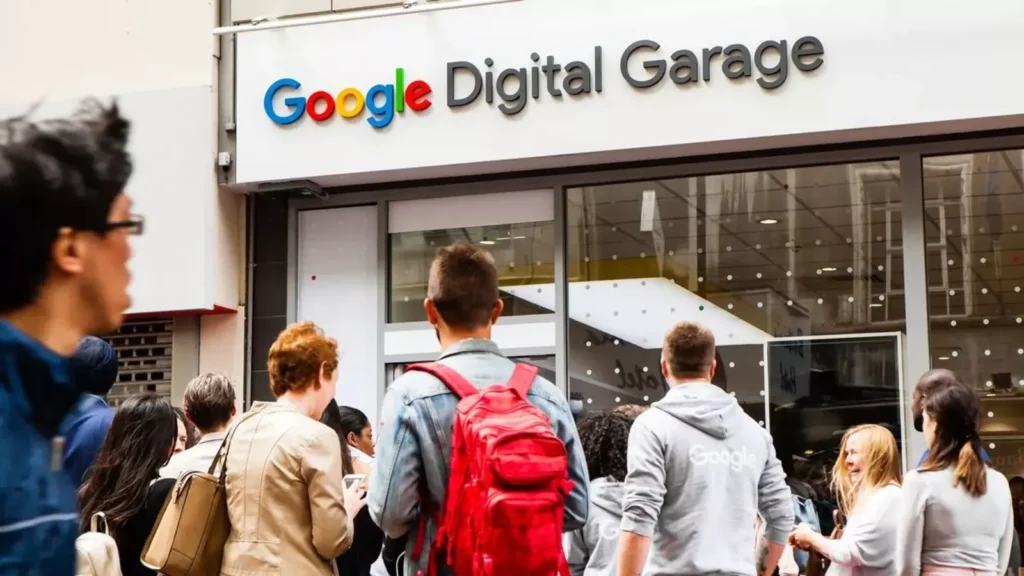
If you are looking for completely free certifications with no hidden costs, this is your gold standard.
- Best For: Digital Marketing, Data Fundamentals, and Career Development.
- The Value: The “Fundamentals of Digital Marketing” course is accredited by the Interactive Advertising Bureau Europe and The Open University. Adding this free certification to your LinkedIn profile signals digital competency to recruiters immediately.
4. Khan Academy
While often associated with K-12 education, Khan Academy offers incredible resources for adults returning to basics.
- Best For: Refresher courses in Mathematics, Economics, and Coding basics.
- Why It Matters: Before diving into a complex Data Science degree, using Khan Academy to brush up on Statistics is a smart, foundational step.
5. Udemy
Udemy operates on a marketplace model. While many courses are paid, there is a vast selection of free online courses.
- Best For: Practical, hands-on skills like “Excel for Beginners” or “Intro to Photoshop.”
- Tip: Filter by “Price: Free” to find thousands of hours of content. Note that free Udemy courses usually do not include a certificate of completion, but the knowledge gained is invaluable for portfolio building.
6. LinkedIn Learning
Formerly Lynda.com, this platform is integrated directly into the world’s largest professional network.
- Best For: Soft skills, leadership management, and business software.
- Access: While subscription-based, they offer a generous free trial (usually one month). Many local libraries also provide free access to LinkedIn Learning with a library card.
High-Demand Skills to Learn in 2025
To maximize career advancement, align your learning with market demand.Here are the top three sectors where free courses can lead to immediate job opportunities.
Artificial Intelligence and Machine Learning
AI is no longer a buzzword; it is a workplace necessity.
- What to learn: Prompt Engineering, Introduction to LLMs (Large Language Models), and AI Ethics.
- Where to find it: Look for Google’s “Generative AI Learning Path” or Andrew Ng’s “AI for Everyone” on Coursera.
Data Analytics and Science
Data is the new oil. Companies are desperate for professionals who can interpret data to drive business decisions.
- What to learn: SQL, Python, Tableau, and Excel.
- Where to find it: The “Google Data Analytics Professional Certificate” is a popular entry point, and while the certificate is paid, the content is audit-friendly.
Digital Marketing and SEO
Every business needs an online presence.
- What to learn: Search Engine Optimization (SEO), Social Media Marketing, and Content Strategy.
- Where to find it: HubSpot Academy offers highly respected, 100% free certifications in Content Marketing and Inbound Marketing that are widely recognized by employers.
How to Choose the Right Course (Following E-E-A-T)
Not all free online courses are created equal.To ensure you aren’t wasting your time, apply the E-E-A-T framework to your selection process.
Expertise of the Instructor
Check the instructor’s bio. Are they a professor at a reputable university or a senior professional at a company like Meta or IBM? Avoid courses taught by “gurus” with no verifiable industry experience.
Experience of the Platform
Stick to established e-learning sites. Newer, unknown platforms may vanish overnight—taking your course records with them. Established platforms ensure your syllabus is recognized by HR departments.
Authoritativeness of the Content
Does the course have a syllabus? specific learning outcomes? peer reviews? A high-quality course will list exactly what skills you will gain (e.g., “You will learn to build a neural network using TensorFlow”) rather than vague promises (e.g., “You will become a tech wizard”).
Trustworthiness of Reviews
Read the 3 and 4-star reviews. These often give the most balanced view of the course’s pros and cons, unlike 5-star rave reviews which can sometimes be botted or incentivized.
Leveraging Certifications for Career Advancement
Taking the course is only half the battle. To see real career advancement, you must effectively showcase your new skills.
Update Your Resume and LinkedIn
Don’t just list the course title. Under your “Education” or “Certifications” section, add a bullet point describing what you learned.
- Bad: “Completed Python Course.”
- Good: “Completed ‘Python for Data Science’ (IBM) – Gained proficiency in Pandas and NumPy libraries to analyze large datasets.”
Build a Portfolio Project
Employers value “show” over “tell.” If you took a web design course, build a sample website.If you took a marketing course, run a mock campaign. Link these projects in your resume. This proves that you didn’t just watch the videos—you absorbed and applied the knowledge.
Network with Peers
Most e-learning sites have discussion forums. Engage with them. Your classmates are future colleagues, bosses, or business partners. Networking in these global classrooms can open doors to international opportunities.
The Future of E-Learning
As we move deeper into 2025, we can expect free online courses to become even more interactive. Virtual Reality (VR) labs and AI-driven tutors that provide personalized feedback are already emerging. Staying committed to lifelong learning is the only way to “future-proof” your career against automation and economic shifts.
The era of “one degree for life” is over. The era of the “lifelong learner” is here.By utilizing these resources, you are taking control of your professional destiny, one module at a time.
Frequently Asked Questions (FAQs)
1. Which Government free online courses with certificates?
Government free online courses with certificates are available through official platforms like SWAYAM and NPTEL (by the Ministry of Education and IITs), Skill India / NSDC, DIKSHA, NIELIT, and AICTE portals, offering courses in IT, AI, engineering, management, healthcare, and skill development.
2. Which Best free online courses with certificates?
You can boost your career in tech, business, and digital skills with top free online courses that offer certificates from major platforms like Google Digital Garage (e.g., Digital Marketing).
3. Can I get a job with just free certifications?
While certifications alone might not guarantee a senior role, they are excellent for entry-level positions or pivoting careers. They serve as proof of interest and baseline knowledge, which can get you the interview.
4. What is the best free course for a salary hike?
Courses in Data Analytics, Project Management (like PMP basics), and AI Prompt Engineering currently have the highest ROI (Return on Investment) regarding salary potential.
5. Which e-learning sites are completely free?
Khan Academy, Google Digital Garage (select courses), and HubSpot Academy are completely free and offer recognized value. Platforms like Coursera and edX offer free access to content (auditing) but usually charge for the verified certificate.

