
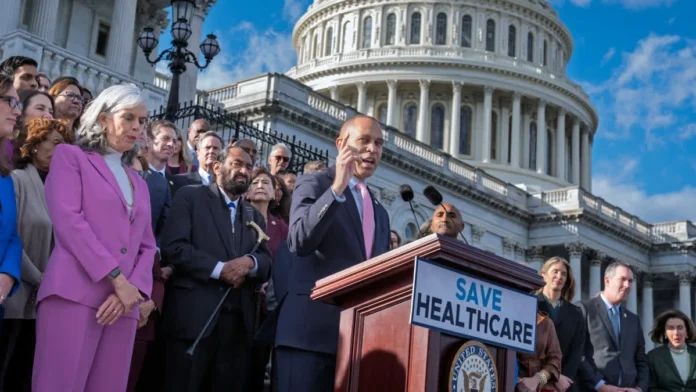
Alright, folks, the rollercoaster is finally over! After a record-breaking 35 days, the longest government shutdown in US history has come to an end. But let’s be honest – this isn’t just a news update; it’s a moment to pause and ask, “Okay, so what now?” For those of us in India, following these global events, it raises important questions about political stability and the potential impact on international relations. Let’s dive deep, shall we?
Why Should You Care About a US Government Shutdown (Especially in India)?
Here’s the thing: even though it’s happening across the globe, a US government shutdown has ripple effects that reach pretty far. Think of it like this – when the world’s largest economy sneezes, everyone catches a cold. Funding lapses can stall crucial international projects, impact trade agreements, and even influence investment strategies. We in India are increasingly connected to the global economy, and we should take note. Beyond economics, it reveals a lot about the political climate and the increasing polarization – trends that are, sadly, not unique to the US.
The Immediate Aftermath | Agencies Reopen, Backlogs Begin
So, what’s the immediate fallout? Federal employees are heading back to work – many of whom were working without pay or furloughed entirely. Agencies like NASA, the National Park Service, and the IRS are reopening. But here’s the catch: a massive backlog awaits them. Imagine the pile of unread emails, unprocessed applications, and delayed projects. It will take weeks, if not months, to catch up. The short-term effects of a federal funding gap include delayed tax returns, slowed scientific research, and disruptions to travel. For example, the National Park Service will need time to restore trails and services.
The Bigger Picture | What Caused This and Could It Happen Again?
Let’s be real: this shutdown wasn’t about a sudden budget shortfall. It was a political showdown over funding for a border wall. The Democrats refused to approve the funds, leading to a stalemate. But, congressional gridlock isn’t new. What makes this situation particularly alarming is the willingness to shut down the government as a bargaining chip. The temporary funding bill has averted another immediate crisis, but it sets the stage for potential future clashes. The underlying disagreements haven’t gone anywhere. What fascinates me is how deeply ingrained the political polarization is now; it affects governance at every level.
The Impact on US-India Relations
India and the US have a strategic partnership that covers a wide range of areas, from defense to technology. A stable and functioning US government is crucial for maintaining and strengthening this relationship. While the shutdown may not have directly impacted high-level talks, it creates uncertainty and can potentially delay collaborations on key projects. According to the Council on Foreign Relations , sustained political instability in the US can erode its credibility as a reliable partner. What I initially thought was a US-centric issue has significant bearing on India’s long-term strategic goals.
Looking Ahead | Lessons Learned and Future Implications
The longest US shutdown serves as a stark reminder of the importance of compromise and effective governance. It underscores the need for political leaders to prioritize the needs of their citizens over partisan politics. The consequences of such shutdowns are widespread and can have long-lasting effects on the economy, national security, and international relations. It will be important to observe congressional debates and track the progress of negotiations as the next funding deadline approaches.
FAQ Section
Frequently Asked Questions
What exactly is a government shutdown?
A government shutdown happens when Congress fails to pass funding bills to keep the government running, typically due to disagreements over spending priorities.
How did this shutdown affect federal employees?
Many federal employees were either furloughed (temporarily laid off) or required to work without pay during the shutdown. Back pay was approved once the government reopened.
Is another shutdown possible?
Yes, the current funding agreement is temporary. If Congress cannot reach a long-term budget deal, another shutdown is possible.
What role does the US president play in a government shutdown?
The US president must sign budget bills into law. If the president vetoes a bill, Congress can override the veto with a two-thirds vote in both houses.
What are the potential long-term economic effects?
Prolonged shutdowns can hurt the economy by delaying projects, disrupting services, and reducing consumer confidence. There could be potential of economic consequences .
The most striking thing is how even something that seems purely political can have such concrete, real-world consequences. The next time you hear about a federal government impasse , remember the stories of real people affected, the global ripple effects, and the urgent need for leaders to actually lead.


