
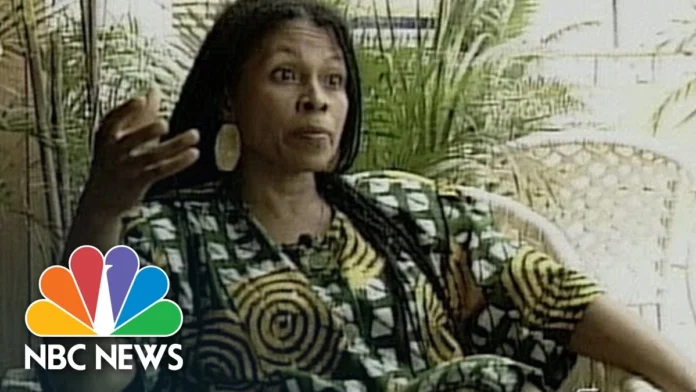
Joanne Chesimard. The name alone evokes strong reactions, doesn’t it? But who was Joanne Chesimard , really? What fascinates me isn’t just the crime she was convicted of, but the layers of complexity surrounding her story, a story that continues to reverberate decades later. So, let’s peel back the layers and try to understand the ‘why’ behind the headlines.
From Activist to Fugitive | A Tumultuous Timeline

Chesimard, later known as Assata Shakur, wasn’t born a fugitive. She was involved in the Black Panther Party and the Black Liberation Army.Her activism emerged during a particularly turbulent time in American history. But, and this is a big ‘but,’ the details of her involvement are hotly debated. It’s important to understand the historical context. The Black Panther Party, while advocating for Black empowerment, also faced significant scrutiny from law enforcement. The FBI’s COINTELPRO program, designed to surveil and disrupt dissident political organizations, targeted groups like the Black Panthers.
Then came the event that changed everything: the 1973 shootout on the New Jersey Turnpike. A state trooper was killed, and Chesimard and two others were convicted. Here’s the thing: the details of the shootout are still contested. Chesimard maintained her innocence, claiming she was shot and unable to participate in the shooting. This is not to say if she’s guilty or innocent, but it is very important to consider all perspectives. The narrative is absolutely critical when trying to understand the full context of this case.
What’s fascinating to me, is how this case is still relevant today. The layers of the story are far more complicated than the headlines suggest. We can not simply say this is just a fugitive on the run from the law. It’s an analysis of the past and a reflection of modern day discussions.
The Escape and Asylum | A Diplomatic Standoff
In 1979, Chesimard escaped from prison. This is where the story takes another dramatic turn. In 1984, she was granted political asylum in Cuba, where she has lived ever since. This decision has been a constant source of tension between the United States and Cuba. The U.S. government has repeatedly demanded her extradition, but Cuba has refused, citing concerns about her treatment in the U.S. justice system. This gets into complex geopolitical issues.
And the debate goes on, even today. The U.S. government considers her a fugitive from justice and has placed a bounty on her head. Cuba views her as a political refugee. It’s a situation with no easy answers, and one that highlights the deep-seated ideological differences between the two countries.
Why Does Joanne Chesimard Still Matter?
Why are we still talking about Assata Shakur decades later? Because her story touches on so many sensitive issues: race, policing, political activism, and international relations. It’s a case study in how historical events can continue to shape present-day debates. Her name is now synonymous with political division, legal disputes, and is a symbol for many activists.
Let’s be honest, the legacy of Joanne Chesimard is complex and controversial. But it’s precisely that complexity that makes it so important to understand. To dismiss her as simply a criminal or a revolutionary is to miss the nuances of a story that reflects the deep divisions within American society. Thinking about her situation forces us to confront uncomfortable truths about race, justice, and power.
The implications of the Joanne Chesimard case go beyond the specific details of the crime. It raises questions about the fairness of the justice system, the role of political activism, and the legacy of historical injustices. These are not easy questions to answer, and they are questions that continue to be debated today.
The Power of Narrative and Conflicting Truths
One of the most striking aspects of the Assata Shakur case is the power of narrative. Both sides have constructed compelling narratives that attempt to explain and justify their actions. The U.S. government portrays her as a cop-killer who evaded justice. Her supporters see her as a political prisoner who was unfairly targeted by the authorities.
These conflicting narratives make it difficult to arrive at a definitive truth. What’s important is to recognize the existence of these different perspectives and to understand the motivations behind them. To consider that there are always multiple sides to a story.
I initially thought this was straightforward. It’s not. We can understand the circumstances that were a catalyst for this situation. What’s more important, is to have the difficult conversations that can potentially prevent circumstances from escalating in the future. That’s where true progress can take place.
FAQ | Understanding the Key Questions About Joanne Chesimard
Frequently Asked Questions
What exactly was Joanne Chesimard convicted of?
Chesimard was convicted of the first-degree murder of a New Jersey State Trooper, as well as assault and battery on a police officer, and illegal possession of a weapon.
Why did Cuba grant her political asylum?
Cuba has stated that it granted her asylum because it believed she was a political prisoner who was being persecuted for her activism.
What is the U.S. government’s position on her case?
The U.S. government considers her a fugitive from justice and has repeatedly called for her extradition to face the consequences of her conviction.
Is there any chance she will ever be extradited?
Given the strained relationship between the U.S. and Cuba, and Cuba’s firm stance on the issue, extradition seems unlikely at this time. But political circumstances can always change. Stay on top of current events for further developments.
Where is Joanne Chesimard now?
It is believed that she is currently living in Cuba, but her exact whereabouts are not publicly known.
The case of Joanne Chesimard challenges us to think critically about justice, power, and the enduring legacy of the past. It’s not a simple story, but it’s a story that continues to resonate, demanding that we grapple with the complexities of history and the ongoing struggle for a more just society.


