
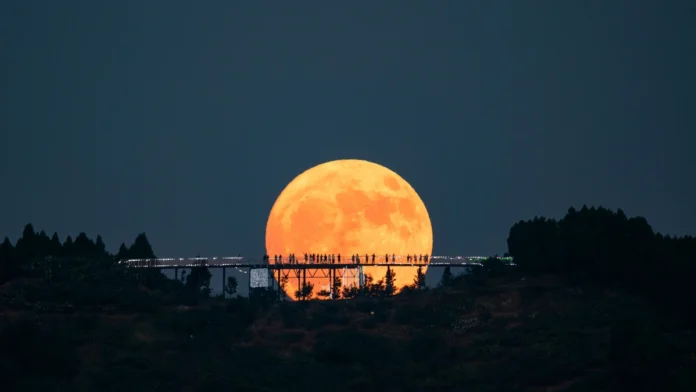
Hey space enthusiasts! Get ready to mark your calendars because November is bringing us a celestial treat – a supermoon ! And not just any supermoon; this one’s the closest and brightest we’ve seen since 2019. So, what’s the big deal? Let’s dive in and find out why this astronomical event is worth setting your alarm for.
What Makes This Supermoon So Special?
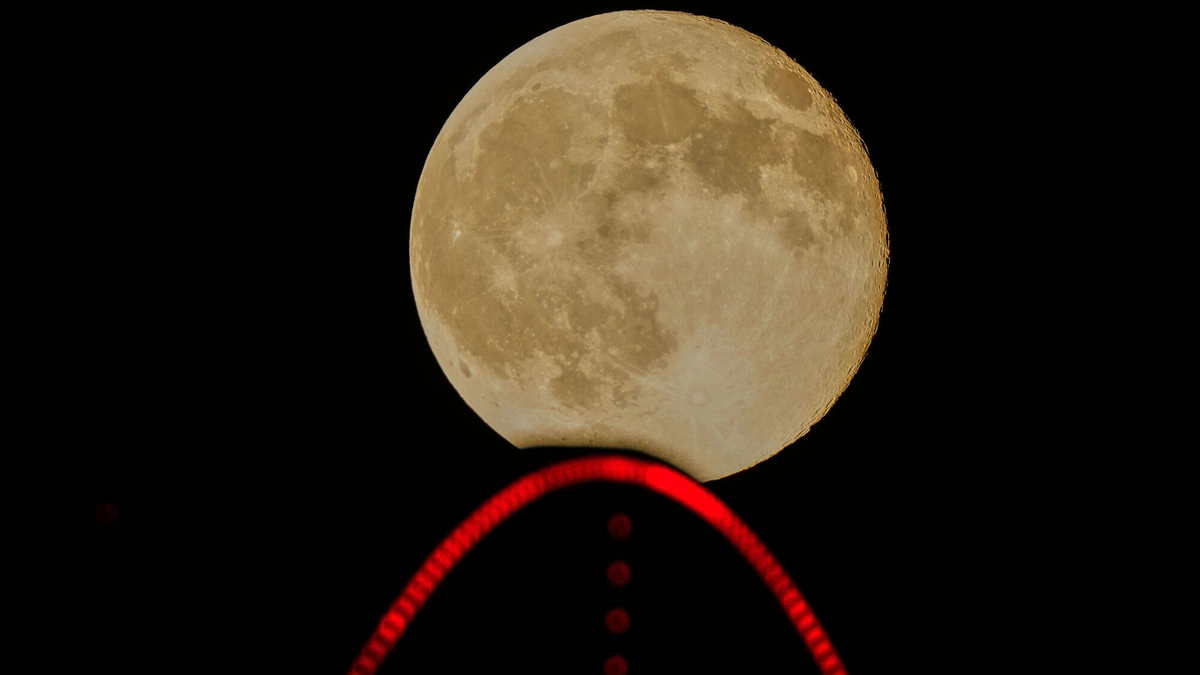
First things first, what exactly is a supermoon? Well, it’s when a full moon coincides with the point in its orbit where it’s closest to Earth (known as perigee). This makes the moon appear significantly larger and brighter than your average full moon. But here’s the thing… the November supermoon is exceptionally close. Think of it like this: the moon’s orbit isn’t a perfect circle. Sometimes it’s closer, sometimes it’s farther. November’s full moon is happening almost exactly at perigee, making it a real showstopper.
What fascinates me is how much brighter it gets, it’s not just a subtle difference, but a noticeable glow that really makes you stop and stare.
Why Should You Care? (The Analyst’s Perspective)
Okay, so it’s a bigger, brighter moon. Big deal, right? Wrong! This isn’t just about pretty pictures (although, let’s be honest, those are a bonus). The supermoon phenomenon has some interesting implications. Firstly, it’s a reminder of the dynamic nature of our solar system. The Earth, moon, and sun are constantly interacting, creating these amazing celestial events.
More practically, the proximity of the supermoon affects our tides. Expect higher-than-usual high tides and lower-than-usual low tides. It is a noticeable difference if you live close to coastal areas. The influence of the supermoon even extends to folklore and mythology, with different cultures attributing various meanings and powers to the event. It’s a chance to connect with the stories and traditions of our ancestors.
How to View the November Supermoon (The Guide’s Perspective)
Alright, you’re convinced. You want to see this supermoon for yourself. Here’s how to make the most of it:
- Check the Timing: Find out the exact date and time of the peak full moon in your location. Timeanddate.com provides accurate information based on your time zone.
- Find a Dark Spot: Light pollution is the enemy. Get away from city lights as much as possible. Even a park on the outskirts of town can make a huge difference.
- Use Your Eyes (and Maybe Binoculars): You don’t need fancy equipment to enjoy the supermoon. Your naked eyes will do just fine. But if you have a pair of binoculars, they’ll enhance the experience, revealing more details on the lunar surface.
- Make It an Event: Invite friends, pack some snacks, and turn it into a stargazing party. Trust me; sharing the experience makes it even more memorable.
That Feeling of Awe (The Storyteller’s Perspective)
I remember the first time I saw a supermoon. I was a kid, and I was camping with my family. I woke up in the middle of the night, peeked out of the tent, and BAM! There it was – this enormous, glowing orb hanging in the sky. It felt almost unreal, like something out of a movie. That feeling of awe and wonder is something I’ll never forget. And that’s what I hope you experience too.
Let’s be honest, life can get pretty hectic. We’re all caught up in our daily routines, rushing from one thing to the next. But sometimes, it’s important to pause and look up. To appreciate the beauty and wonder of the universe. The November supermoon is the perfect excuse to do just that. It’s a chance to reconnect with nature, with the cosmos, and with that sense of childlike wonder we all carry inside.
Supermoon’s Impact on Culture and Science
Interestingly, supermoons have influenced various aspects of human culture and scientific research. Historically, full moons were crucial for navigation and timekeeping, and a supermoon would have amplified these effects. In modern science, researchers study the subtle gravitational effects of the moon, including during supermoon events, to understand tidal patterns and even seismic activity. This celestial event bridges our past and present, connecting us to both ancient traditions and cutting-edge science.
FAQ About the November Supermoon
When is the best time to view the supermoon?
The best time is usually right after moonrise or just before moonset, when the moon is closer to the horizon and appears even larger due to an optical illusion.
Will I need a telescope to see it?
No, the supermoon is easily visible with the naked eye. Binoculars can enhance the view, but aren’t necessary.
Is the November supermoon dangerous?
No, it’s a natural phenomenon. While it can cause slightly higher tides, it’s not dangerous.
What if it’s cloudy?
Unfortunately, cloud cover will obscure the view. Check the weather forecast and try to find a location with clear skies.
How often do supermoons happen?
Supermoons occur several times a year, but the November supermoon is the closest since 2019. Make sure not to miss the next lunar event !
So, there you have it. Everything you need to know about the November supermoon. Now get out there, look up, and enjoy the show! You will not regret looking at this celestial phenomenon . Remember to share it with your friends, and spread the joy.


