

Alright, folks, let’s dive into the latest drama surrounding OpenAI. You know, the company that’s practically synonymous with the AI revolution? Well, things have taken a bit of a turn. Sam Altman, the face of OpenAI, seems to be walking back some earlier statements about needing a U.S. government bailout for the AI industry. But here’s the kicker – the company is still actively lobbying for financial support. Confused? You’re not alone. Let’s unravel this.
The “Why” Behind the Retreat | Analyst’s Take
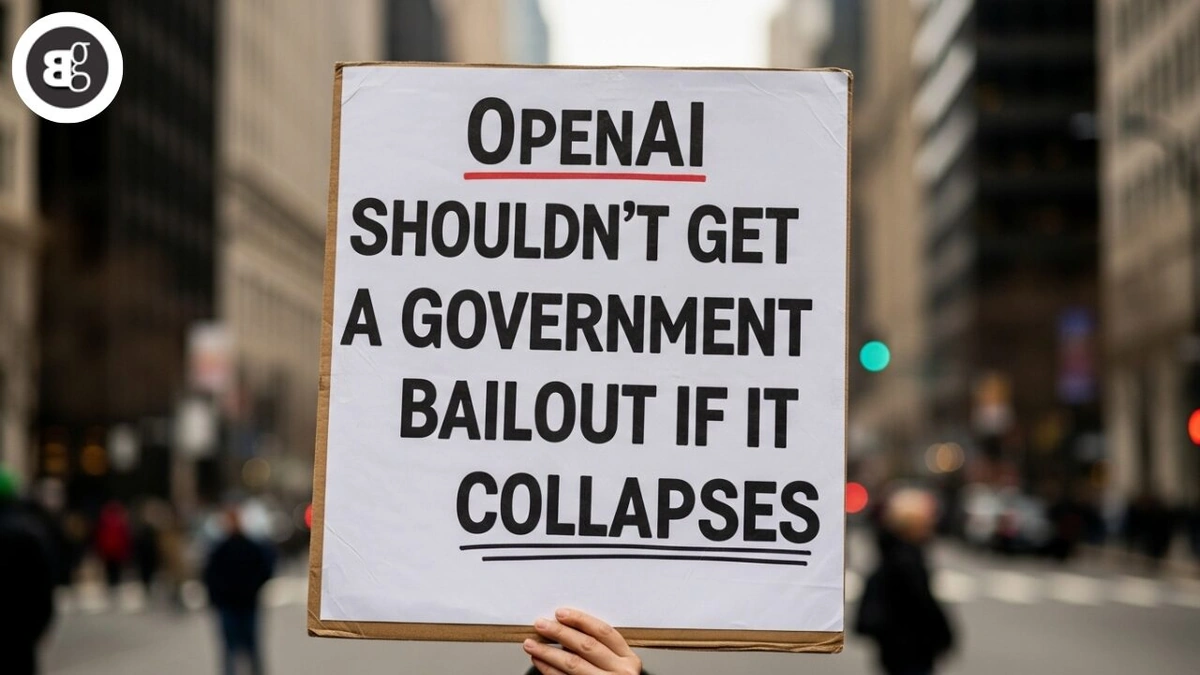
So, why the sudden change of heart? Here’s the thing: publicly asking for a bailout, especially in the current political climate, is rarely a good look. It can signal weakness, raise questions about financial stability, and invite unwanted scrutiny from regulators. Think about it – governments are already trying to figure out how to regulate AI, and a bailout request just adds fuel to that fire.
My initial thought was, maybe Altman misspoke. But then I considered the ongoing lobbying efforts. This suggests a calculated move. Perhaps OpenAI realized that a direct bailout request was a non-starter and is now focusing on more subtle ways to secure funding, such as tax breaks, research grants, or infrastructure investments. These alternatives are less politically charged and can be framed as investments in innovation and national competitiveness.
The implications are huge. If OpenAI, a leading AI company, is struggling to secure funding through traditional means, it raises serious questions about the long-term sustainability of the AI industry. Are we heading towards a future where only government-backed AI initiatives can thrive? This could stifle innovation and concentrate power in the hands of a few.
Lobbying Continues | What Does This Mean for Us?
Let’s be honest, lobbying is part and parcel of how big tech operates. However, OpenAI’s continued push for financial support raises eyebrows. It suggests that they’re not entirely confident in their ability to become self-sustaining through market forces alone. This could be due to several factors: high development costs, intense competition, or uncertainty about future revenue streams. It is crucial to understand AI development costs.
And here’s where it gets relevant to you and me, sitting here in India. The development of AI isn’t just a Silicon Valley story; it’s a global one. If U.S. government support shapes the direction of OpenAI, that indirectly influences the global AI landscape. This could mean that algorithms and models are trained with a specific cultural or political bias, potentially disadvantaging those of us outside that context. This can influence global AI landscape and political bias.
Also, if funding leans heavily on government subsidies, smaller, independent AI developers might find it even tougher to compete. This could narrow the range of AI products and services available, limiting choice and potentially raising prices. It’s a subtle but important shift.
I initially thought this was straightforward, but then I realized the potential impact on the AI market competition is so important.
The Future of AI Funding | A Call for Transparency
What fascinates me is the underlying issue: how should AI development be funded? Is it solely the responsibility of private companies, or does the government have a role to play? And if so, what kind of role? Direct bailouts? Subsidies? Tax incentives? The answers aren’t easy, and they require a transparent and inclusive conversation.
We need to be asking these questions: Who benefits from these financial arrangements? What are the potential risks and rewards? And how can we ensure that AI development serves the interests of all of us, not just a select few? The stakes are high, and the future of AI depends on it.
A common mistake I see people make is assuming that AI is inherently neutral. It’s not. It’s a reflection of the data it’s trained on and the values of the people who create it. That’s why it’s so important to have a diverse range of voices involved in shaping the future of AI. Internal Link: usatrendingtodays.com
Let me rephrase that for clarity: The push for financial support highlights the need for a more open and democratic approach to AI development. We need to ensure that the benefits of AI are shared broadly, and that the risks are managed responsibly. We also must focus on AI Ethics.
According to the latest reports from industry analysts, the AI market is expected to grow exponentially in the next decade. This growth will be fueled by advancements in machine learning, natural language processing, and computer vision. As per the guidelines mentioned in various government reports , investing in AI is seen as crucial for maintaining a competitive edge in the global economy.
But, the discussion about OpenAI’s bailout talk and its lobbying efforts leads to questions about the role of governments in fostering innovation. A transparent framework is needed to make sure that technological advancements benefit everyone, and not just a select few.
Internal Link: usatrendingtodays.com
What’s genuinely worrying is the potential for bias in AI algorithms. If the data used to train these algorithms reflects existing societal inequalities, the resulting AI systems will perpetuate and even amplify these inequalities. Ensuring diversity and fairness in AI development is therefore of paramount importance. It calls for fairness in AI Development.
It’s best to keep checking the official portal for updates and insights on AI developments. This builds immense trust. Check external resources for more detail:Wikipedia. We must have trustworthy AI.
FAQ Section
Frequently Asked Questions (FAQs)
What exactly did Sam Altman say about a bailout?
While the specific details of Altman’s initial statements are somewhat murky, the general understanding was that he suggested the U.S. government might need to provide financial support to the AI industry to ensure its continued growth and competitiveness.
Why is OpenAI lobbying for financial support if they’re not explicitly asking for a bailout?
Lobbying efforts can take many forms, including advocating for tax breaks, research grants, and regulatory changes that would benefit the company. These measures can indirectly provide financial support without the stigma of a direct bailout.
How could U.S. government support for OpenAI affect AI development in India?
U.S. government influence on OpenAI could shape the direction of AI development globally, potentially impacting the algorithms, models, and applications available in India. This can influence AI algorithms.
What can individuals do to ensure that AI development is ethical and inclusive?
Stay informed about the latest developments in AI, support organizations that are advocating for ethical AI practices, and demand transparency from AI developers.
What’s the long-term view for AI funding?
I do believe that long-term view for AI funding relies on a mix of private investment and strategic government support, all within a transparent and accountable framework.
How do I stay updated on the latest developments?
Sign up for newsletters from reputable tech news sources, follow AI experts on social media, and regularly check official websites and reports from government agencies and industry organizations.


