
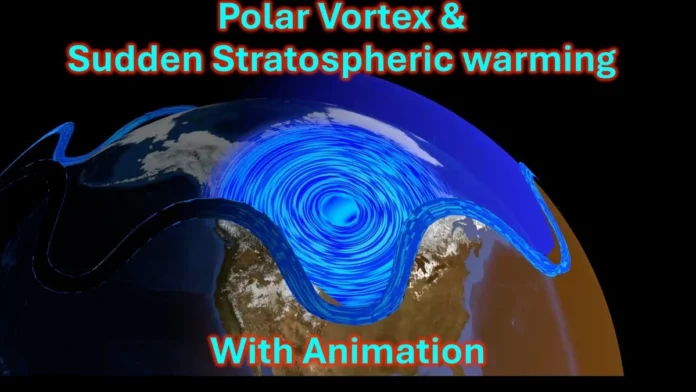
Okay, let’s be real. When you hear ” polar vortex stratospheric warming ,” your eyes might glaze over. It sounds like something a scientist in a lab coat would mutter. But here’s the thing: it’s actually a really big deal, and it affects our weather right here in the United States. I initially thought it was just some abstract concept, but then I realized its direct impact on our daily lives. So, what’s the real deal? I will explain to you what is happening.
What Exactly IS Stratospheric Warming? (And Why Should I Care?)
First, some background. The stratosphere is a layer of the atmosphere above the troposphere (where we live and where our weather happens). Stratospheric warming events are basically sudden increases in temperature way up there sometimes by as much as 50 degrees Celsius in just a few days. According tothe National Weather Service, these events can disrupt the normal circulation patterns of the polar vortex.
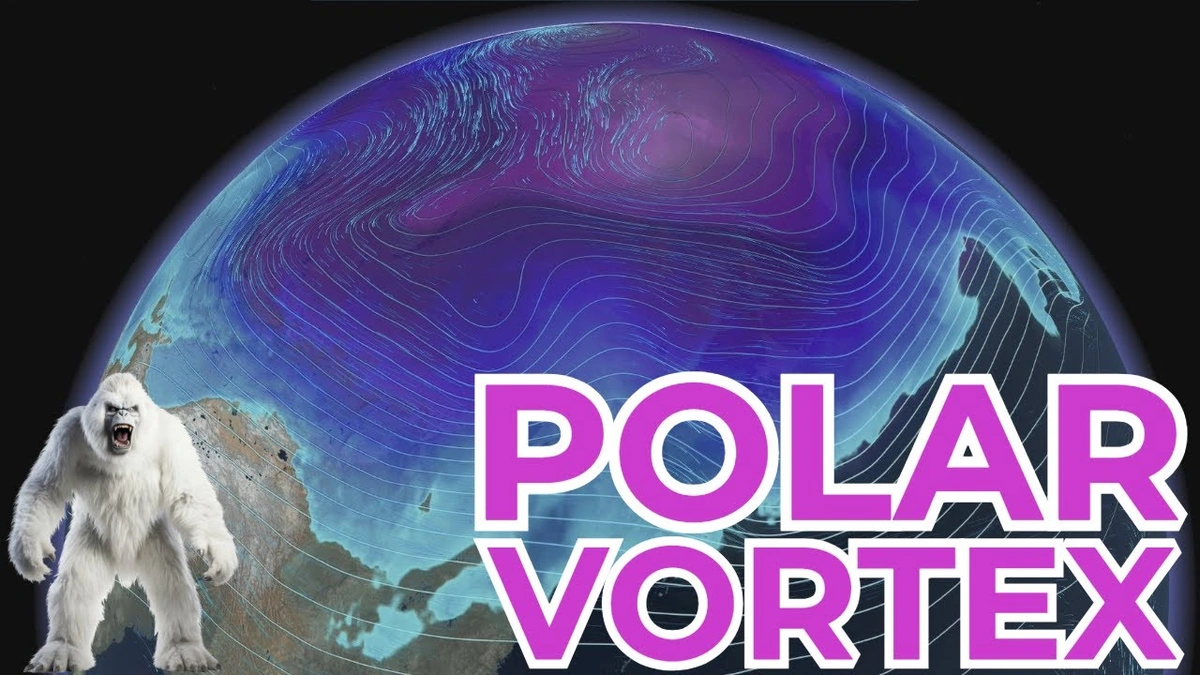
But why do we care if it gets warmer way up there? Well, that’s where the polar vortex comes in. The polar vortex is a large area of low pressure and cold air surrounding both of Earth’s poles. It’s always there, but it’s typically strongest in the winter. Think of it like a giant spinning top keeping all the cold air bottled up near the Arctic. But when stratospheric warming happens, it can weaken the polar vortex or even split it apart. This sends frigid air spilling southward, leading to unusually cold weather in places like the United States and Europe.
The Ripple Effect | From Stratosphere to Your Backyard
Here’s how the dominoes fall: stratospheric warming weakens the polar vortex. A weakened polar vortex can then wobble or stretch, sending lobes of cold air southward. These lobes bring with them prolonged periods of below-average temperatures, snowstorms, and other wintry weather. This isn’t just a one-day event; it can last for weeks. A common mistake I see people make is thinking this just means a few cold days. It can mean significant disruptions to agriculture, transportation, and energy infrastructure. And as usatrendingtodays.com reports, the economic impacts can be substantial. It’s important to understand this arctic air outbreak is a domino effect that starts far, far above our heads.
But, and this is crucial, not all stratospheric warming events lead to major cold outbreaks. It’s complicated! Sometimes, the polar vortex recovers quickly, and the impact on our weather is minimal. Other times, the disruption is more significant and longer-lasting. The atmosphere is a complex system, and predicting the exact outcome of a stratospheric warming event is still a challenge for meteorologists, even when analysing long-term climate patterns .
What Causes Stratospheric Warming?
So, what triggers these warming events in the first place? It’s not just random. One of the main drivers is something called “planetary waves.” These are large-scale disturbances in the atmosphere that can propagate upward from the troposphere into the stratosphere. When these waves interact with the polar vortex, they can transfer energy and momentum, causing it to weaken and warm. This sudden stratospheric warming is what causes the domino effect that we discussed above.
Think of it like pushing a child on a swing. If you push at the right frequency, you can get the swing to go higher and higher. Planetary waves are like those pushes, and the polar vortex is like the swing. Sometimes the push makes the swing go wild!
Looking Ahead | Can We Predict These Events?
The big question, of course, is can we predict these stratospheric warming events and their potential impact on our weather? The answer is…sort of. Scientists are getting better at it, but it’s still not an exact science. They use sophisticated computer models to simulate the atmosphere and track the development of planetary waves and the behavior of the polar vortex. These models can often provide several weeks of advance warning of a potential stratospheric warming event. But predicting the exact location and intensity of the resulting cold outbreak is still challenging. Understanding tropospheric dynamics is crucial in making accurate predictions.
Let me rephrase that for clarity: We’re getting better at seeing the warning signs, but pinpointing where and how hard the cold air will hit is still a work in progress. As per the guidelines mentioned by meteorologists, these events can be difficult to predict.
And honestly, what fascinates me is how interconnected everything is. Something happening miles above our heads can have such a profound impact on our daily lives. It’s a reminder that the Earth’s atmosphere is a complex and delicate system, and that even small changes in one part of the system can have far-reaching consequences.
FAQ | Polar Vortex & Stratospheric Warming
What’s the difference between the polar vortex and stratospheric warming?
The polar vortex is a persistent area of low pressure and cold air around the poles, while stratospheric warming is a sudden temperature increase in the stratosphere that can weaken or disrupt the polar vortex.
Does stratospheric warming always mean a cold outbreak for me?
Not always. While it increases the risk, the polar vortex can recover, or the cold air might be directed elsewhere.
How long does a stratospheric warming event last?
The warming itself happens over a few days, but the effects on the polar vortex and subsequent weather patterns can last for weeks or even months.
Where can I get reliable information about upcoming weather events?
Always rely on official sources like theNational Oceanic and Atmospheric Administration (NOAA)and your local National Weather Service office for accurate forecasts.
Are climate change and stratospheric warming related?
That’s a complex question scientists are still researching. Some studies suggest climate change could be influencing the frequency or intensity of stratospheric warming events. The relationship is very difficult to determine, though.
Is the polar vortex new? I just started hearing about it.
No, the polar vortex has always existed. It’s just that it’s become a more popular term in recent years as these events have become more widely discussed in the media.


