
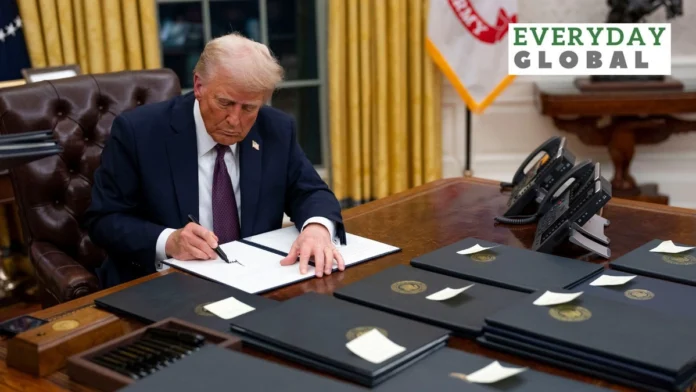
Alright, let’s be real. When you hear ” Trump executive orders ,” your mind probably jumps to headlines and cable news shouting matches. But what actually happens when an executive order gets signed? What’s the real deal? I mean, who actually knows all the details? You’re not alone. Here’s the thing: understanding these orders requires digging deeper than just the surface-level news.
The “Why” | Power, Policy, and Presidential Directives
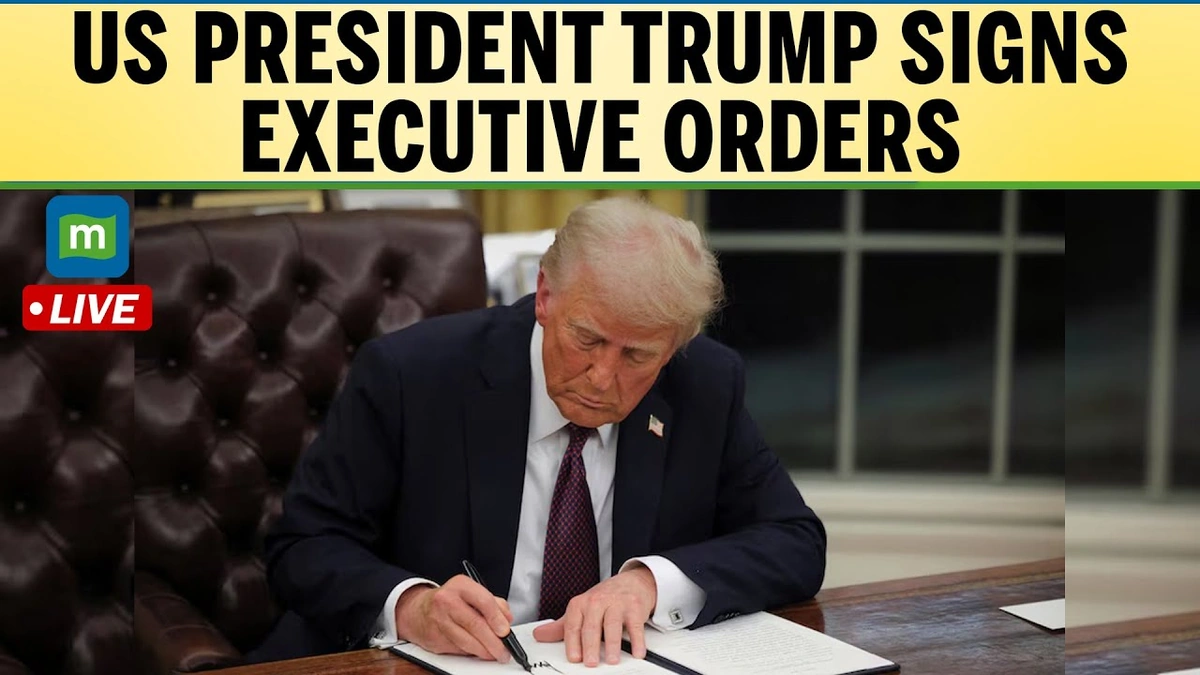
Executive orders, at their core, are directives issued by the President of the United States that manage operations of the federal government. Think of them as memos from the CEO of the country. They carry the force of law, but here’s where it gets interesting. They don’t need congressional approval. Now, this is a pretty big deal and this is a crucial piece in understanding their impact. It’s a way for a president to enact policy without going through the often slow and contentious legislative process.
But, (you knew there was a “but” coming, right?) the power of presidential executive orders isn’t unlimited. They generally can’t create new laws, appropriate funds, or contradict existing legislation passed by Congress. They typically direct federal agencies on how to implement existing laws or establish new policies within the executive branch. For example, an order might instruct the Environmental Protection Agency (EPA) to prioritize certain environmental regulations or direct the Department of Justice to focus on specific types of criminal activity.
And this is where the “why” comes in to play. Why use an executive order instead of going through Congress? Well, sometimes it’s about speed. Sometimes, it’s about political gridlock. A president might use an executive order to act quickly in response to an emergency or to bypass a Congress that’s unwilling to cooperate on a particular issue. Consider this: Executive orders can be easily overturned by the next President (or deemed unconstitutional by the Supreme Court). Thus, there are ways to challenge executive power .
A Look Back | Key Executive Orders Under Trump
During his presidency, Donald Trump issued a number of high-profile executive orders that sparked considerable debate. I’ll go into a couple of examples. One of the most controversial was Executive Order 13769, often referred to as the “travel ban.” Signed in January 2017, it restricted entry into the United States for citizens of several Muslim-majority countries. This order faced immediate legal challenges and widespread protests, raising questions about religious discrimination and presidential authority. The order was later revised after court rulings.
Another notable example is Executive Order 13771, which mandated that for every new regulation issued by a federal agency, two existing regulations had to be repealed. This order aimed to reduce the regulatory burden on businesses and stimulate economic growth. Critics argued that it weakened environmental protections and public health safeguards. Another was aimed at border security and enhanced enforcement of immigration laws. You can check the Federal Register online to see all the actions he took while in office.
The Aftermath | Impact and Legacy
So, what happens after an executive order is issued? Well, federal agencies are tasked with implementing the order, which can involve developing new regulations, policies, and procedures. The impact of an executive order can vary widely, depending on its scope and the resources allocated to enforce it. Some orders have a far-reaching impact, affecting millions of people and shaping national policy for years to come. Others are more limited in scope and have a more localized effect.
Moreover, it’s not uncommon for executive orders to face legal challenges. Opponents can argue that an order exceeds the president’s constitutional authority, violates existing laws, or infringes on individual rights. These challenges can wind their way through the courts, sometimes reaching the Supreme Court. The courts have the power to strike down executive orders that they deem unconstitutional, and that’s what we’ve seen in the past.
The legacy of Donald Trump’s executive orders is complex and multifaceted. Some orders were praised by supporters as necessary to protect national security and promote economic growth. Others were condemned by critics as discriminatory, harmful, and an abuse of presidential power. The long-term impact of these orders will continue to be debated and analyzed for years to come. And this ties into the next important election.
Navigating the Noise | Understanding the Nuances
The issue with executive actions is that they can feel so absolute. The truth is, the reality is far more nuanced. The power of an executive order is limited by the Constitution, existing laws, and the courts. And, as we’ve seen, they can be easily reversed by subsequent presidents. It’s worth remembering that the political climate significantly influences the use and perception of executive orders. What one president sees as a necessary action, another may view as an overreach of power.
Plus, the media plays a crucial role in shaping public opinion about executive orders. The way an order is framed and presented in the news can have a significant impact on how it’s perceived by the public. So, it’s essential to be critical of the information you consume and to seek out multiple perspectives. It is vital to understand the context of presidential actions .
It’s easy to get caught up in the political theater surrounding these orders, but it’s important to remember that they have real-world consequences. By understanding the nuances of executive orders, we can better evaluate their impact and engage in informed discussions about their role in our government.
FAQ | Executive Orders Explained
What’s the difference between an executive order and a law?
An executive order is issued by the president and doesn’t require congressional approval, while a law must be passed by Congress and signed by the president.
Can Congress overturn an executive order?
Congress can’t directly overturn an executive order, but it can pass legislation that contradicts the order or limits its scope.
What happens if an executive order is challenged in court?
The courts will review the order to determine if it’s constitutional and consistent with existing laws. If the courts find the order to be invalid, they can strike it down.
How many executive orders has Donald Trump issued?
Donald Trump issued 220 executive orders during his presidency.
Are there different types of executive orders?
Yes, they can cover a wide range of topics, from national security to economic policy to environmental regulations.
Can a future president change or revoke Trump’s executive orders?
Yes, a subsequent president can modify, revoke, or replace any executive order issued by a previous president.
Executive orders are a powerful tool, but they’re not the final word. They’re subject to checks and balances, and their impact is often debated and contested. And this constant tug-of-war is, frankly, part of what makes American democracy so fascinating – and frustrating – all at the same time. Knowing the history of controversial executive orders helps one understand this aspect.


